Tip #2 is journaling. Small action. Powerful effects.
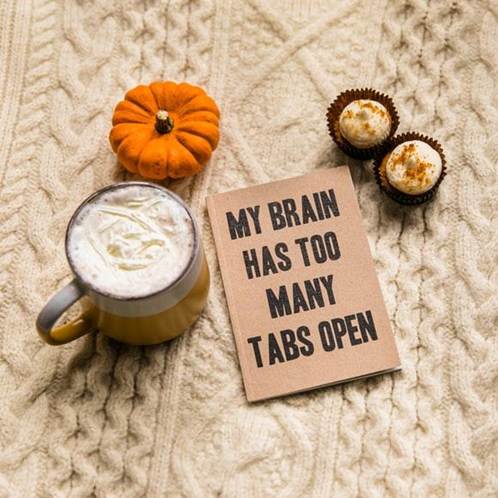
Anxiety affects about 40 million adults in the US, according to the Anxiety and Depression Association of America. They also report that anxiety disorders affect about 25.1% of children between 13 to 18 years old.
The effects of anxiety can be severe and far-reaching. In this content piece, I explore 3 helpful tips if you’ve noticed that your anxiety messes with your memory.
How Anxiety Affects Memory
Someone asked me once if anxiety could lead to a foggy memory or even memory loss. My answer was a straight yes.
The mechanism for this is pretty straightforward.

When you’re anxious, it’s like you’re stuck in a never-ending cycle of worry and nervousness. This constant state of worry and nervousness feels like you’re constantly being threatened by something. This feeling of being threatened impacts two parts of your brain: your limbic system and your working memory.
The Limbic System Hijacks the Working Memory
Now, the way we store memory is rather complex. There isn’t a single part of the brain that’s like the memory bank. That’s alright because the specific kind of memory that is affected by general anxiety (or panic attacks) is the working memory.
The pre-frontal cortex handles the details of your working memory and is often involved in our information processing speed. It is very separate from your limbic system.
Your limbic system is responsible for processing emotions and eventually storing your memories (this time, a different kind of memory called declarative memory). It is also in charge of keeping you safe from danger.
Your working memory stores information very temporarily. Information like someone’s name, a person’s address, your teacher’s instructions, conversations with other people, information from the textbook you’ve been studying.
Basically, anything that you should recall within a day is taken care of by your working memory.
Since the limbic system is charged with keeping you safe, it reacts to your anxious thoughts about being threatened by believing that you are in actual danger.
Your body (along with your prefrontal cortex) freezes, fights, or tries to flee from the threat. Except, the threat isn’t real, and you’re only creating anxious, worrying thoughts viciously.
In that time, your prefrontal cortex pretty much becomes toast, unable to help you with its working memory or information process function. That’s when you forget or have trouble concentrating.
How Can I Make Anxiety Stop Messing with my Memory?
The short answer is: By making the anxiety go away.

Now, it is not easy to do this. Research shows that anxiety is caused by complex factors, including genetics and specific brain chemistry. Not much that you can do about the genetics and brain chemistry part.
That’s why these 3 tips involve practice; they’re not exactly magical tips to make all your anxiety go away. With these 3 tips, you can manage your anxiety and significantly improve your working memory.
Tip #1: Try to get some good sleep
I know! You didn’t see that one coming, but here’s the simple logic. In an anxious state, your body and your brain are working over-time. Throwing some sleeplessness into the mix will only increase your anxiety levels and reduce your ability to recall things in the short term.
Can’t seem to be able to doze off? Try this deep-breathing technique that works for me every time.
Count slowly to 4 while inhaling, count to 4 again while holding your breath, then count slowly to 4 while exhaling.
This deep-breathing technique relaxes you by the third round, and you’ll be asleep before you know it.
Tip #2: Journaling
When you forget something you shouldn’t because you’ve been anxious the whole time, it tends to increase your anxiety.
Writing things down can solve this problem. If you have tasks you need to get to in a few minutes, write them down so you can consult your notepad or a note-taking app on your phone.
Think you’d want to come back to a particular topic that you’re discussing, write it down.
Someone gives you instructions you should follow? Write it down so you can remember.
More importantly, keeping a journal (physical or on your phone) can help you work through your anxious thoughts. You should know that if your intent for journaling isn’t mindful, intentional, or positive, it may not work.
Positive reasons you should journal your anxious thoughts:
To bring them out on paper; To demystify their effect on you; To empower your belief that you are more than your anxious thoughts.
Tip #3: Brain & Physical Exercise
Since we understand the mechanism that leads to anxiety-related memory loss, we also understand what we’re working with.
You must train your physical body and your brain function to respond better to anxious thoughts.
Physical exercises like taking a stroll, a jog, a morning or evening run can improve your mood and strengthen your mental processes. Getting some crossword puzzles, picking up a new skill, like a language or knitting, or a hobby can shift your focus from your anxious thoughts every day.
Final Thoughts…
You have the power to train your brain to reduce your anxiety levels. It requires daily mindful, intentional practice, and once you have these 3 habits locked in, your memory will improve.
Are you willing to try out at least one of these tips today?
Don’t forget your deep breathing exercise.
I hope this helps!