You’ve most likely heard the term ADHD which stands for Attention Deficit Hyperactivity Disorder. Maybe you also have some ideas about the symptoms and how people with ADHD generally behave. Today, you’re about to pick up on some extra knowledge on the condition.
We’ll start with a bit of history.
From Sir. George Still to the DSM
ADHD went largely undiagnosed until 1902, when a British pediatrician named Sir George Frederic Still discovered it. At the time, all that was known were the most common symptoms of the condition; uncontrollable behavior in children.
As far as Sir George could tell, the intelligence level in affected children was not impaired by the condition. They just couldn’t seem to be able to control themselves the same way that other children could.
The American Psychological Association (APA) plays a vital role in promoting the knowledge of psychology to enhance the health and welfare of children and adults of all ages in the United States and beyond. One of the ways they played this role in the early 1950s was by releasing the Diagnostic and Statistical Manual of Mental Disorders (DSM).
The DSM serves as an important guide for diagnosing mental disorders. However, the first-ever DSM, released in 1952, did not list ADHD. This omission has since been corrected, but many reports say that the under-diagnosis of ADHD cases was mainly because of its absence in the DSM. Critics and supporters of the DSM’s role in modern psychology and psychiatry acknowledge that the manual remains a work in progress, not a perfect guide. By 1968, the first mention was made of ADHD, under the label, hyperkinetic reaction of childhood.
Not All ADHDs Were The Same
Naming the condition was still tricky in 1968. Hyperkinetic, meaning hyperactive, ruled out several symptoms that would later fall under the same condition. Lack of attentive focus, for instance, was one of the symptoms found in children that were also hyperactive. More research into the condition would later discover that not all inattentive children were hyperactive.
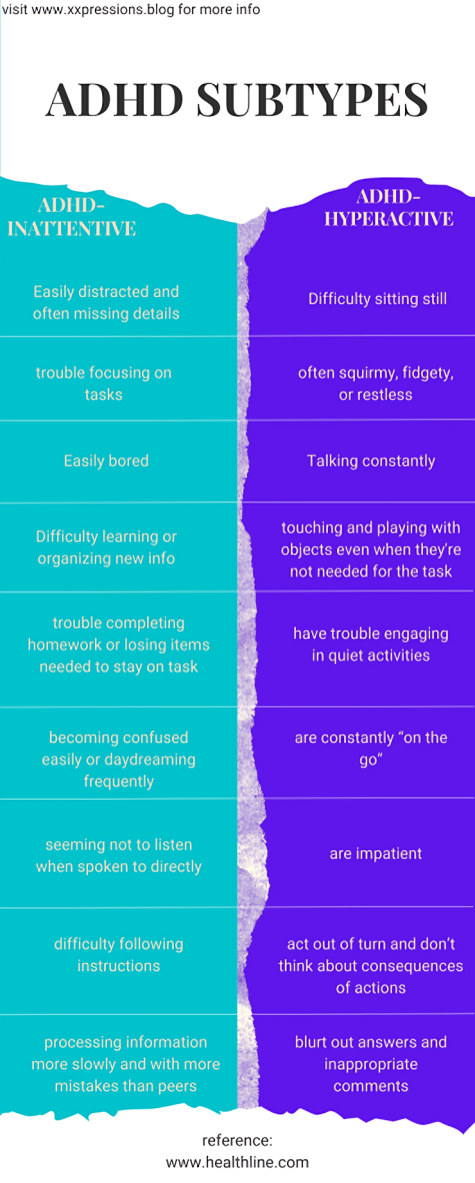
Three more revisions of the DSM in 1980, 1987, and 2000, and the naming moved first to attention deficit disorder (ADD) and then to attention deficit and hyperactivity disorder (ADHD), and then three subtypes of ADHD were identified, namely;
ADHD Inattentive
True to its name, children and teenagers with this subtype are less active than those with the ADHD-hyperactive subtype. About nine symptoms are recognized as ADHD-Inattentive, and specialists must identify at least six of the nine before a formal diagnosis.
ADHD Hyperactive/Impulsive
Children and teenagers with this subtype are impulsive and hyperactive. As with the ADHD-Inattentive, there are nine symptoms of impulsivity and hyperactivity in children and teenagers. Typically, anyone with ADHD-Hyperactive disrupts everything around them.
ADHD Combined
Some children and teenagers exhibited both signs of inattention and hyperactivity. Doctors can diagnose children and teenagers with ADHD-Combined if they show at least six out of the nine signs from each subtype.
Diagnoses are A Work in Progress
Before the DSM was released, diagnoses were few and infrequent. As you might guess, it made it tough to help people find the treatment and support they need. The directions for diagnosis in the DSM are constantly revised as new evidence emerges in the study of human psychology.
Formal diagnoses go a long way to help us understand neurodivergent characteristics and live our lives to the fullest. People living with any of the ADHD subtypes listed in this piece can benefit from support from family, schoolteachers, and their peers. ADHD does not affect a person’s intelligence levels and with proper support, learning and education can be successful.
I hope this helps!