Have you ever struggled in school and started wondering if you were simply “bad at learning”?
Maybe you needed more time to understand a lesson than your classmates. Maybe you struggled with tests, homework, reading, writing, mathematics, or remembering information. Perhaps you worked hard but your grades never seemed to reflect the effort you were putting in.
Over time, experiences like these can affect how you see yourself.
You might start thinking, “Maybe I’m just not smart.”
But struggling in school and struggling to learn are not the same thing.
School is only one environment where learning happens. And the way schools measure learning does not always capture the many different ways people understand, process, remember, and use information.
School Success and Learning Are Not Exactly the Same
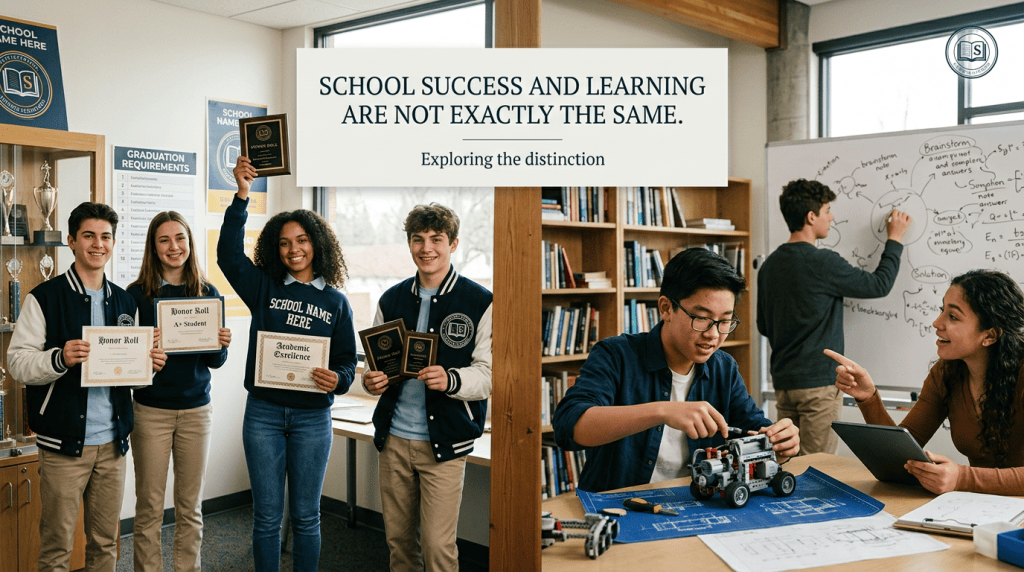
Grades can tell us something about how a student performed on particular assignments, tests, or academic requirements.
They don’t tell us everything about that person’s ability to learn.
A student might receive a low grade because they misunderstood the instructions. They might have difficulty concentrating in a noisy classroom. They may need more time to process information. They may understand the material but struggle to demonstrate that knowledge during a timed test.
Someone might even understand a subject extremely well but perform poorly because they become overwhelmed by exams.
This doesn’t mean grades are meaningless.
It means grades have a context.
A grade represents performance on a particular task under particular circumstances. It shouldn’t automatically become a permanent statement about someone’s intelligence or potential.
People Don’t All Learn in the Same Way

One of the biggest problems with the idea that someone is “bad at learning” is that it assumes learning works the same way for everyone.
It doesn’t.
Some people learn best by reading.
Others understand something better when someone explains it aloud.
Some people need diagrams, demonstrations, examples, repetition, hands-on practice, or a combination of several approaches.
And sometimes the issue isn’t the learning method at all.
A student may understand information but have difficulty with the process of showing what they know.
For example, writing an answer may be much harder than explaining the same answer verbally. Memorizing information for a test may be difficult even when the person can apply that information successfully in a real-world situation.
Different challenges can require different kinds of support.
Needing More Time Doesn’t Mean You’re Less Capable
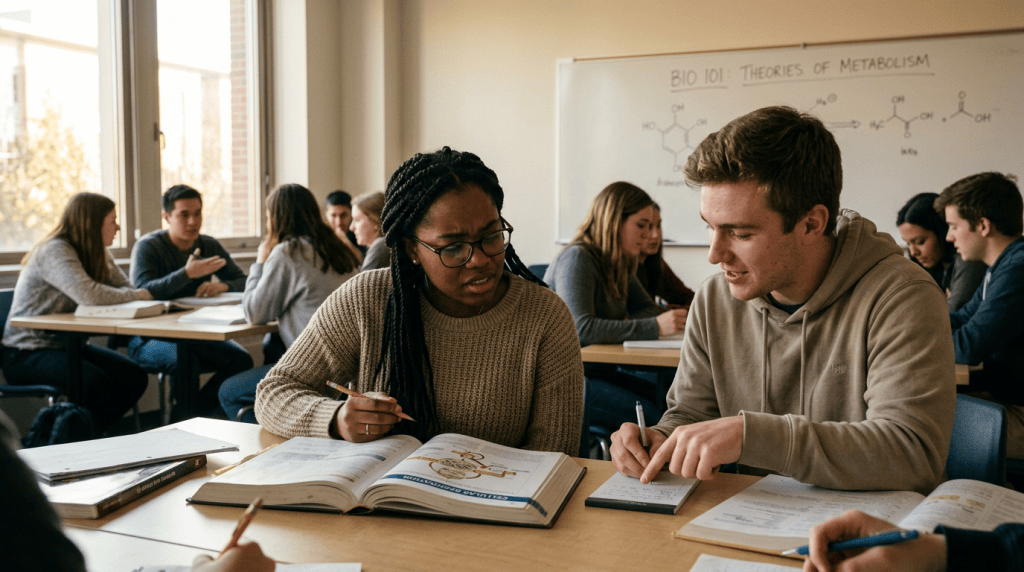
There is often an unspoken assumption in education that the fastest person to understand something is the smartest person in the room.
That’s not necessarily true.
People process information at different speeds.
Someone may understand a concept immediately and forget it later. Another person might need several explanations before everything clicks—but once they understand it, they may remember it for years.
Learning isn’t a race.
Needing repetition isn’t a character flaw.
Asking questions isn’t a sign of weakness.
Taking longer to understand something doesn’t automatically mean you lack intelligence.
Sometimes it simply means your brain needs a different amount of time or a different route to get there.
Struggling Can Affect Confidence
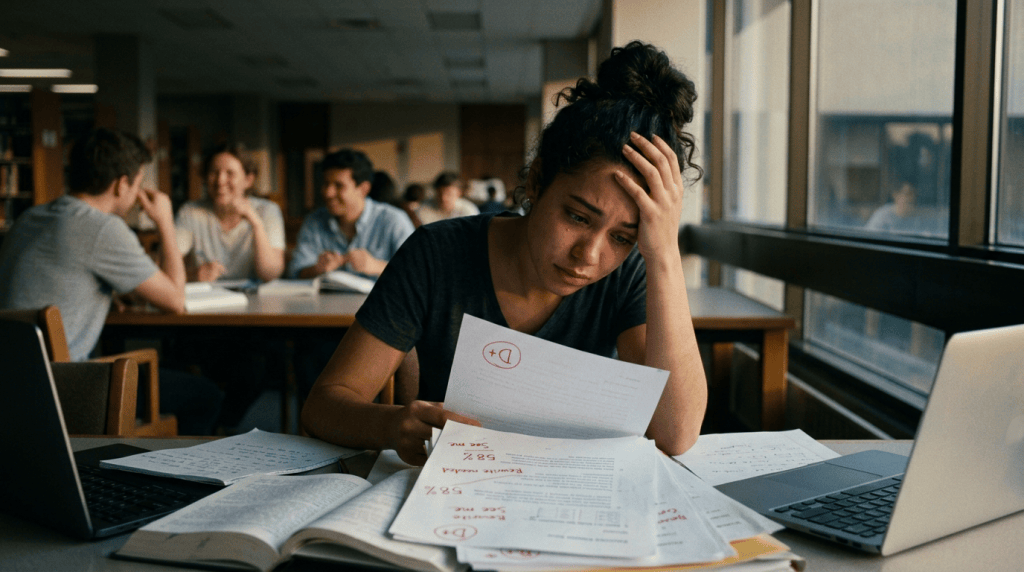
Academic struggles can become especially difficult when they happen repeatedly.
Imagine working hard on an assignment, receiving a disappointing grade, and then hearing comments about how you “should have done better.”
Then it happens again.
And again.
Eventually, the problem may stop feeling like one bad assignment.
It can start feeling like an identity.
Instead of thinking:
“I struggled with this subject.”
A student may begin thinking:
“I’m bad at this.”
Then that can become:
“I’m bad at school.”
And eventually:
“I’m bad at learning.”
Those statements are very different.
The first describes an experience.
The last one turns that experience into a judgment about the entire person.
That’s a much bigger conclusion than the evidence supports.
Sometimes the Environment Is Part of the Problem
When someone struggles academically, it’s easy to immediately focus on what the student is doing wrong.
But learning doesn’t happen in isolation.
The environment matters.
A classroom may move too quickly for a particular student. Instructions may be unclear. A student may be dealing with stress, distractions, communication barriers, or difficulties accessing the material in the way it is being presented.
A teaching method that works wonderfully for one student may not work as well for another.
This doesn’t necessarily mean the teacher is doing something wrong either. Teaching a classroom full of different students is complicated.
The important point is that learning difficulties shouldn’t automatically be treated as evidence of personal failure.
Sometimes the question shouldn’t be:
“What’s wrong with this student?”
It might be:
“What is making this particular learning situation difficult?”
That change in perspective can make a significant difference.
Mistakes Are Part of Learning
Another reason students may believe they’re bad at learning is that they associate mistakes with failure.
But mistakes are unavoidable when you’re learning something new.
Think about learning to ride a bicycle, cook a new recipe, use unfamiliar software, play an instrument, or learn another language.
You probably won’t get everything right immediately.
You make mistakes.
You adjust.
You try again.
You learn from what happened.
Academic learning works in much the same way.
Getting an answer wrong can provide information about what you understand and what you still need to practice.
A mistake isn’t always proof that learning isn’t happening.
Sometimes it’s evidence that you’re in the middle of the learning process.
Difficulty in One Area Doesn’t Define Everything You Can Learn
A person can struggle with mathematics and be excellent at storytelling.
Someone can have difficulty with reading and still be highly curious about the world.
Someone can struggle with memorization but become excellent at solving practical problems.
Someone can have trouble writing essays but be able to explain complicated ideas in conversation.
Human abilities are not neatly divided into “smart” and “not smart.”
People have different strengths and different areas where they need more support.
Even within the same subject, a person may find some skills easy and others frustrating.
That’s normal.
Your School Experience Isn’t the End of Your Learning Journey
One of the most important things to remember is that school eventually ends.
Learning doesn’t.
People continue learning through work, hobbies, relationships, travel, reading, technology, creativity, mistakes, conversations, and everyday experiences.
Sometimes people who struggled in traditional education discover that they learn very differently outside the classroom.
They may become interested in subjects they never cared about in school.
They may find practical learning easier than theoretical lessons.
They may discover that they enjoy researching, creating, building, explaining, experimenting, or teaching others.
A difficult school experience doesn’t have to predict your entire relationship with learning.
You Are Allowed to Learn Differently
If school has made you feel like you’re “bad at learning,” it may be worth separating your identity from your academic history.
You are not a report card.
You are not one exam.
You are not one disappointing semester.
You are not the worst grade you ever received.
And struggling with something doesn’t automatically mean you’re incapable of learning it.
Sometimes you need more time.
Sometimes you need a different explanation.
Sometimes you need more practice.
Sometimes you need support.
Sometimes you may simply discover that a particular subject isn’t your strength—and that’s okay too.
The goal isn’t to become perfect at everything.
The goal is to understand how you learn, recognize where you need support, and give yourself permission to keep learning even when the process isn’t easy.
Learning Is Bigger Than School
School can be an important part of education, but it is not the complete definition of learning.
If you struggled academically, that experience deserves to be understood—not used as a permanent label.
You can struggle and still be curious.
You can make mistakes and still improve.
You can need help and still be capable.
You can learn differently without being bad at learning.
Sometimes the biggest step forward isn’t convincing yourself that you’re suddenly great at everything.
It’s simply realizing that having difficulty learning something is not the same as being incapable of learning.
And that distinction can change the way you see yourself.