There’s nothing biological that makes boys love blue and girls love pink.

On the one hand, we can say that some aspects of femininity and masculinity are biological. But, for the most part, the ideas of what is feminine and masculine are socially constructed. Let’s find out more about how much femininity and masculinity are socially constructed.
Sex and Gender
In a field of study called sociology, experts separate the ideas of sex and gender, and for very good reason too. Sex is often assigned based on body morphology and reproductive organs present. As far as feminine or masculine relates to reproductive organs, then it is biological.
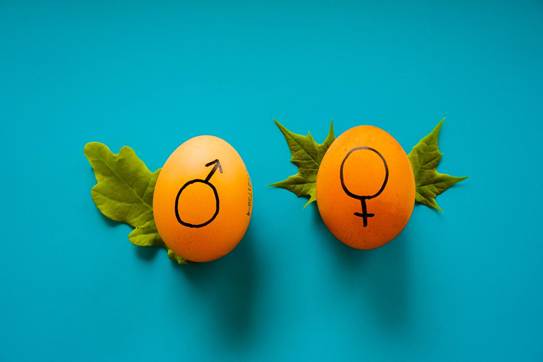
On the other hand, gender identity and gender roles are made by society. This is what it means for gender to be a social construct.
Gender as a social construct
Our world is filled with different kinds of societies. What works in American society may not be acceptable in other societies. Now, there are beliefs held by almost everyone in each society. These beliefs may have existed for so long that people begin to think it is natural.
Most of the time, these beliefs that people hold to be natural are only socially constructed. This means that those beliefs would fall apart if no one believed in them anymore.
The idea that people should be able to fit into a feminine role because they happen to have biologically female morphology or reproductive organs is a social construct.
Social constructs are not as objective as, say, biology. If a child is born with male reproductive organs and assigned a masculine gender, it’s clear why. But, to ask that child to eventually fit into specific categories of behavior or expression based on this biological sex is constructed.
Femininity & Masculinity as Social Constructs
Blue is for boys, and pink is for girls. Skirts are for girls and pants are for boys. Taking care of people comes naturally to women. Men don’t cry.

No, that is not true or objective or biological; it’s a construct.
There are many constructs like them, and depending on what society you visit, gender constructs are always different.
Another example of femininity and masculinity as social constructs is the idea that women take care of the home, house chores, cook, and raise the children while the men go to work.
Considering that every human being needs to eat to live, giving one gender the full responsibility of preparing meals might be absurd. That’s just what social constructs become: a little absurd.
Thankfully, these roles aren’t so rigid anymore. As more people become more aware of the not-so-natural social constructs they’ve been taught as children, they actively unlearn these ideas.
Let’s Wrap This Up…
Biological reasons make women better communicators and men a little bit stronger.
On average.
Average is an operative word here because many people do not entirely fall into these tendencies.
When it’s biology, it’s clear, and it doesn’t matter if people want to believe it or not. But, if it’s socially constructed, you can tell because it has no backing in science and is only valid because society (or group of people) believe it to be true.
Can you think of any more ideas about femininity and masculinity that may be constructed?
I hope this helps!