Gender is a deeply personal aspect of who we are. While some people identify consistently as male or female throughout their lives, others experience their gender in a way that is more flexible and evolving. This experience is often referred to as gender fluidity.
In recent years, awareness of gender diversity has grown, helping more people understand and express their identities. Gender fluidity is one of the many ways people experience gender beyond traditional categories.
What Is Gender Fluidity?

Gender fluidity refers to a gender identity or gender expression that changes over time. A gender-fluid person may identify as different genders at different times or experience shifts in how they understand and express their gender. Unlike a fixed gender identity, gender fluidity allows for movement and change.
For some individuals, these changes may occur frequently, while for others they may happen gradually over months or years. Every person’s experience is unique.
Understanding Gender Identity vs. Gender Expression

To better understand gender fluidity, it helps to distinguish between two important concepts:
Gender Identity
Gender identity is a person’s internal sense of being male, female, both, neither, or another gender altogether.
Gender Expression
Gender expression refers to how a person presents themselves through clothing, hairstyle, behavior, voice, or other characteristics.
A person may experience changes in gender identity, gender expression, or both. Gender fluidity can involve shifts in either area.
Is Gender Fluidity the Same as Nonbinary?
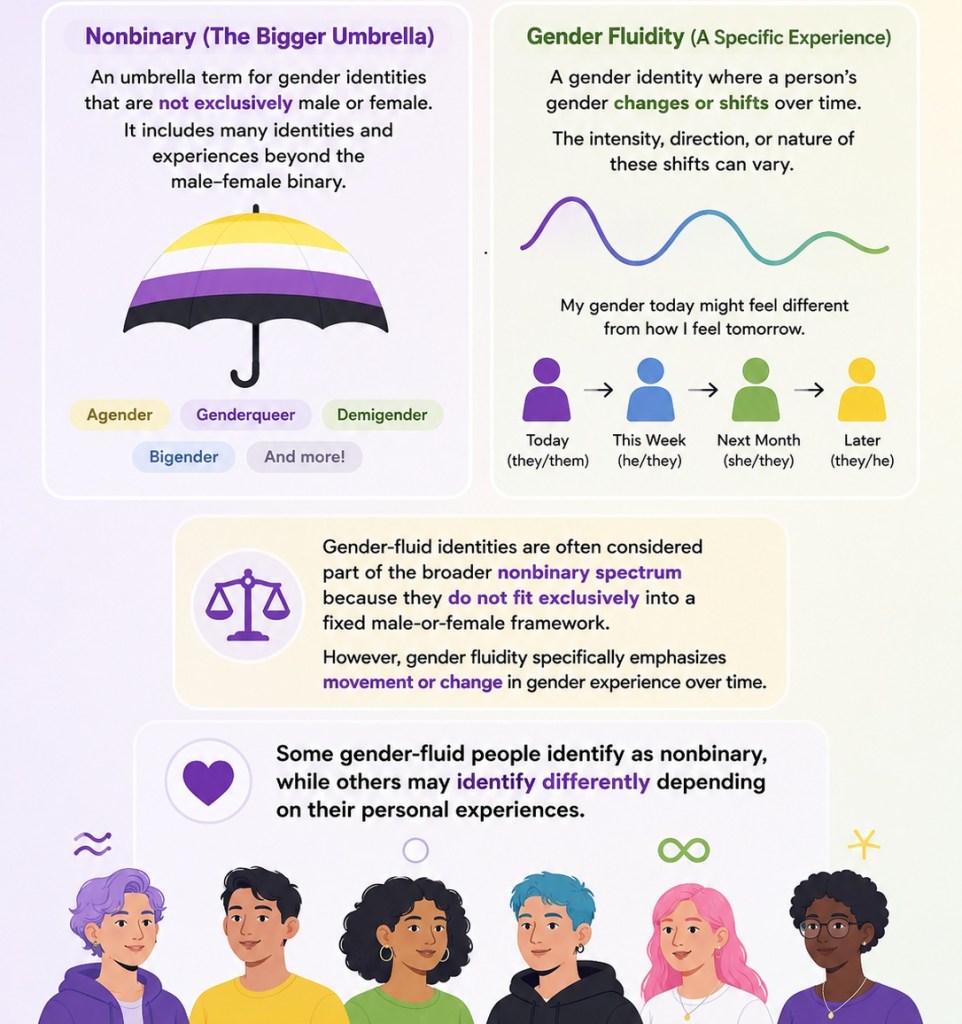
Not exactly.
Gender-fluid identities are often considered part of the broader nonbinary spectrum because they do not fit exclusively into a fixed male-or-female framework. However, gender fluidity specifically emphasizes movement or change in gender experience over time.
Some gender-fluid people identify as nonbinary, while others may identify differently depending on their personal experiences.
Common Experiences of Gender-Fluid Individuals
Although experiences vary widely, some gender-fluid people may:
- Feel more masculine on certain days and more feminine on others.
- Alternate between multiple gender identities.
- Experience both masculine and feminine traits simultaneously.
- Prefer different forms of self-expression at different times.
- Use different pronouns depending on how they identify or present themselves.
It’s important to remember that there is no single “correct” way to be gender fluid.
Pronouns and Gender Fluidity
Pronoun preferences differ from person to person. Some gender-fluid individuals may use:
- He/Him
- She/Her
- They/Them
- Multiple pronoun sets
The best approach is to respectfully ask someone which pronouns they prefer and honor their choice.
Challenges Faced by Gender-Fluid People
Many gender-fluid individuals encounter challenges such as:
Misunderstanding and Stereotypes
Some people incorrectly assume that gender fluidity is a phase or confusion. In reality, gender fluidity is a valid identity recognized by many gender and health professionals.
Social Pressure
Traditional expectations around gender can make it difficult for gender-fluid individuals to express themselves authentically.
Lack of Representation
Although visibility has improved, many gender-fluid people still struggle to find accurate representation in media, education, and public life.
How to Support Gender-Fluid People
Support begins with respect and understanding.
Here are a few ways to be an ally:
- Listen without judgment.
- Respect chosen names and pronouns.
- Avoid making assumptions about someone’s identity.
- Educate yourself about gender diversity.
- Create inclusive and welcoming environments.
Small actions can have a significant positive impact on someone’s well-being and sense of belonging.
Myths About Gender Fluidity
Myth: Gender-fluid people are confused.
Reality: Gender fluidity is a recognized way of experiencing gender and does not indicate confusion.
Myth: Gender fluidity is just a trend.
Reality: Historical and contemporary examples of diverse gender identities have existed across many cultures throughout history.
Myth: All gender-fluid people change genders daily.
Reality: The frequency and nature of gender changes vary significantly from person to person.
Final Thoughts
Gender fluidity reflects the diversity and complexity of human identity. For some people, gender is stable and unchanging. For others, it is flexible, evolving, and deeply personal. Understanding gender fluidity helps create a more inclusive society where everyone has the freedom to express who they truly are.
Respect, empathy, and open-mindedness remain the most important tools for supporting people of all gender identities.