It messes with you for a long time.
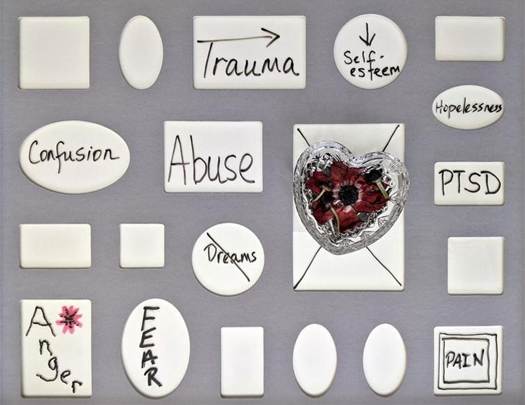
So much happens to us every day. So much of what happens to us every day leaves some emotional, psychological strain on us. Since we have to show up every day, we develop systems that help us cope with those grey areas of our lives.
Everything from your memory to your ability to achieve fulfillment for your life can be affected by trauma. Many people don’t understand that they are traumatized because they have to go on living simply.
The cost is sometimes too great to imagine, but we can learn more about our physical and mental health every day. That way, we can hack those systems and restore a chance for positive experiences and fulfillment.
Trauma. Trauma. Trauma.
Someone, we’ll call her Lizzie, lost her dad suddenly at a very young age. Now that she’s older and in high school, all she remembers is that it’s been her and her mom the whole time.

Except, she and her dad were super close, and she couldn’t stay a few hours without looking for him so they could hang out.
What happened with Lizzie?
The simple answer is Trauma.
The American Psychological Association describes trauma as an emotional response to a shocking or terrible event. People react to shocking events in different ways. Sometimes, the emotional response lasts a few hours to a few days, but other times, it could drag on for years.
In Lizzie’s case, an interesting emotional response happened. She completely blocked out a memory of ever having a father.
Trauma can be acute, chronic, or complex. When trauma is acute, it means an emotional response from a single stressful or shocking event. When it’s chronic, it means several emotional responses from continuous exposure to shocking experiences. Complex trauma means exposure to multiple shocking events that are usually different from or unrelated to each other.
Trauma is a bad situation, whether it’s acute, chronic, or complex. Although, as they say, some trauma may be more traumatic than others.
Unseen Effects of Trauma
For Lizzie, whose traumatic experience led to complete memory loss, the effects of trauma may be more profound than just her memory loss.

The effect of blocking out positive memories of a loved one right after a traumatic event that involves them also robs us of something precious.
Sure, the emotional responses are often a coping mechanism so that we can continue living. However, it gets to a point where we have to wonder about the cost of blocking out everything due to repeated or even single trauma events.
Lizzie could develop deep aversions to close attachments with other people. Her relationship with her mother may grow less and less meaningful for her, and all of this can happen unconsciously.
That is why Lizzie ended up in therapy, a complete mess, yet she cannot seem to understand what’s wrong.
According to all her “present” experiences, she shouldn’t worry about anything. She should be happy.
Incorrectly coping with trauma can lead to uncontrollable consequences in the future. Coping incorrectly, by, for example, blocking out all memories, may provide short-term release, but that event never really leaves us. It stays in our unconscious and subconscious; it can come up at any time with a simple trigger.
Trauma-based Challenges
Beyond its effect on our subconscious and unconscious, trauma can physically affect the brain in a way that disrupts its normal function.
Yep. Trauma can lead to diminished brain function, especially if it’s chronic or complex.
This fact is why kids in high school or middle school who have experienced some form of trauma may struggle with their academic work. Kids who have faced repeated trauma can have trouble recalling many things, and these challenges can lead to anxiety, depression, or both. They’d grow up with several deficits that will affect their ability to become fulfilled adults.
If these effects are Unseen, what can we do?
Tough question.
But, Lizzie, our case study, holds some answers for us. If you notice that you have trouble functioning in school or at work, experience hopelessness, anxiety, or depression, or are emotionally detached from loved ones, there’s probably something going on.
Discover symptoms, then seek therapy.
Now, I’d prefer to approach the discussion of therapy from an inclusive perspective. It does not always have to involve sitting across from a counselor or therapist.
It is possible to work through less severe trauma through mindfulness exercises, intentional journaling, and even creative (e.g., art, music, dance) expressions. The aim would be to release that initial emotional response and avoid locking it into the deeper parts of our consciousness.
As much as I’d love to look on the brighter side, some people cannot work through cases of trauma on their own. You will need as much help as you can get. Like Lizzie, a significant amount of trauma that people deal with isn’t obvious; it’s just there, eating away at happiness, joy, and positivity.
Key Takeaway

Trauma is unwritten, unseen, unrelenting. No one tells you about it, but it’s there. Remember: if you can see it, you can work through it.
I hope this helps!
Learn UCx: Performance and Motivation at Work